Matcha, Mist, and the Morning Bell: Five Hours in Uji
7 min read
Everyone I met in Kyoto told me Uji was a quick stop — two hours, a bowl of matcha, done. They were wrong. I caught the 7:12 Keihan train south, stepped out of the station into a river fog that swallowed the rooftops, and didn't leave until midday. Five hours later I understood why tea masters have been crossing this town's thresholds for nine centuries.
The Phoenix Hall Before the Crowds
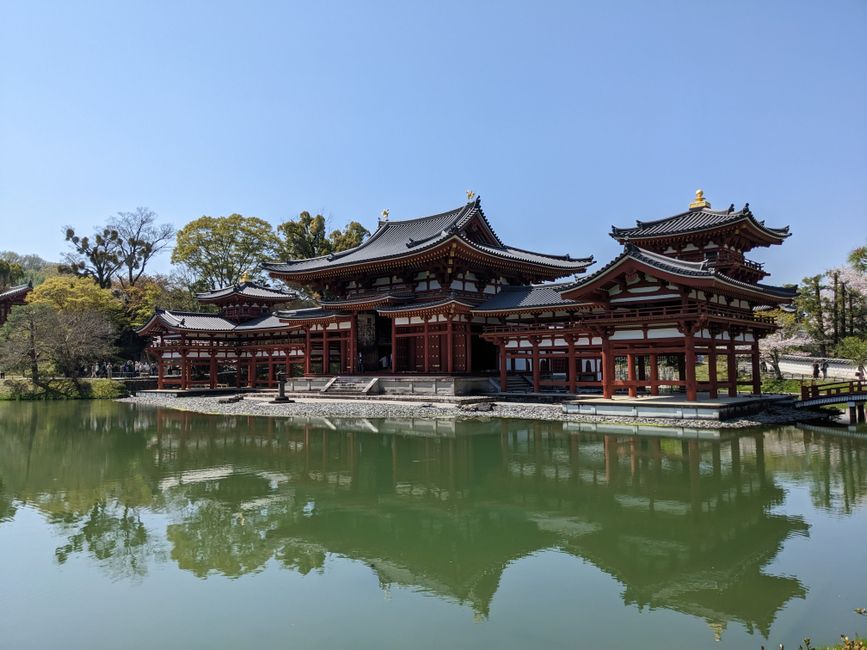
Byōdō-in opens at 8:30, and I was second through the gate. The Phoenix Hall — built in 1053 as the villa of the Fujiwara regent, then converted into a temple — sits on a pond that mirrors it so perfectly that the building looks doubled in the dawn light. This is the image on the ¥10 coin, and for twenty minutes I had it almost entirely to myself, watching carp circle the reflection.
Inside, the gilded Amida Buddha gazes out from beneath a halo of clouds. The details matter: the tiny painted musicians on the walls, the fading vermilion of the wooden beams, the way the hall was designed so the sunrise hits the statue's face. A tour group arrived as I left, and I understood the whole trick of this trip: the early train is not a sacrifice, it is the entire experience.
Stone-Milled Matcha at a Family Tea House
Down the slope toward the river, past shops selling dango and dried seaweed, I found a tea house run by the same family since 1892. The owner poured a scoop of pale tencha leaves into a granite mill and let me crank it myself. Stone-grinding is glacially slow — about 30 grams an hour — because the friction must stay low enough not to toast the leaves. That, he explained, is the difference between matcha and ordinary powdered tea: every grain is cut, not crushed.
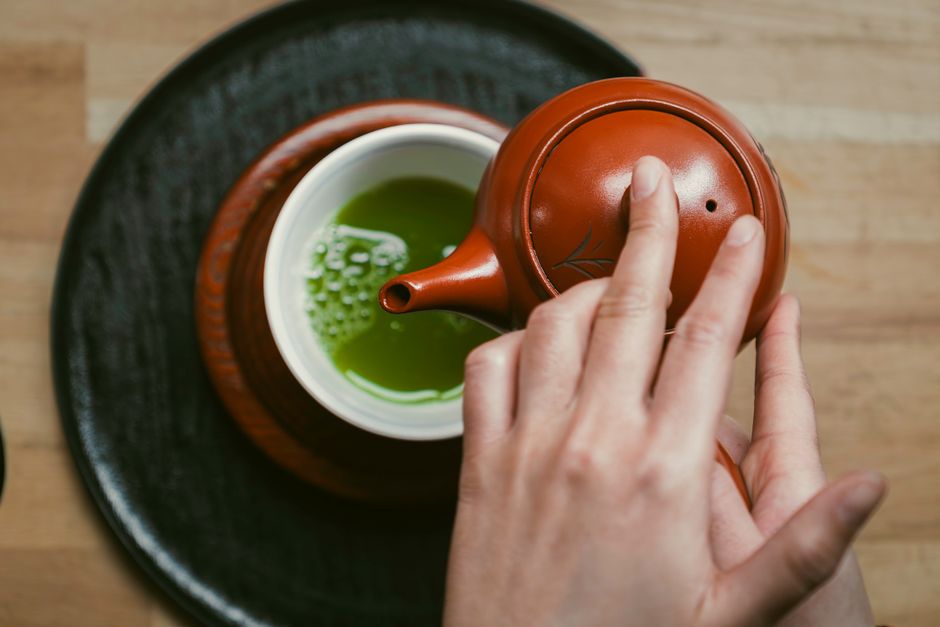
He served two ways: usucha, the thin whisked tea you drink at home, and koicha, the thick syrup-like tea at the heart of the ceremony. The koicha was almost savory, grassy and creamy, balanced by a summer wagashi shaped like a water lily. I bought a tin of the same leaves, which he wrapped in paper with the date and the farm's name, like a wine label.
The Shopping Street and a Riverside Walk
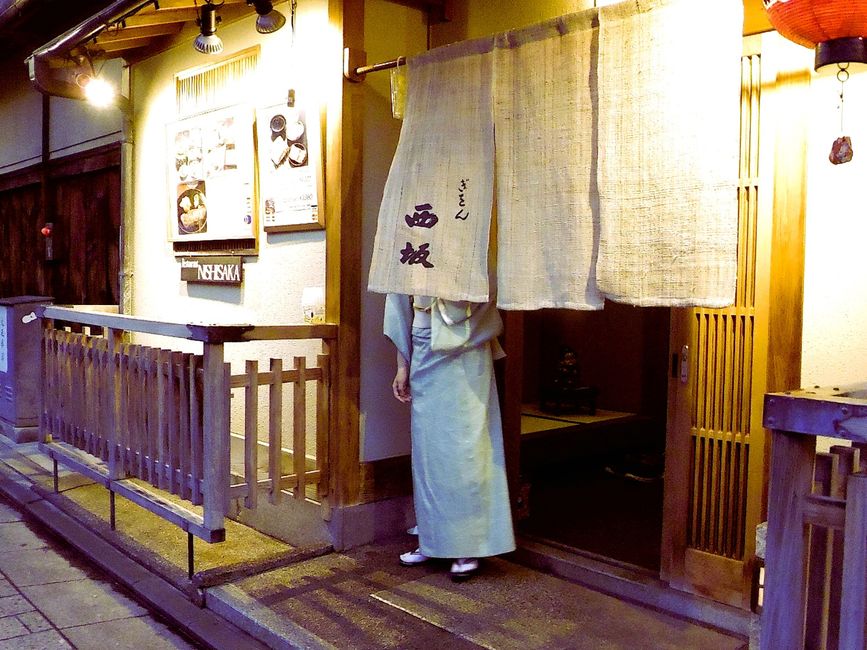
The street between the station and Byōdō-in packs more tea shops per meter than anywhere else in Japan, most of them pouring free samples from iron kettles. Skip the first three shops, I was told — the grinders at the far end are the ones worth your money. The wooden facades and hanging noren curtains give the lane a quiet, almost theatrical rhythm.
From there, the Uji River is five minutes on foot. Chōraku Bridge crosses to the island where summer visitors watch cormorant fishing, and the riverside path runs past stone lanterns and thick late-summer greenery. I ate lunch at a soba shop that kneads matcha into its buckwheat noodles, then sat on a riverbank bench watching the mist finally lift.
By the time the tour buses rolled in around 10:30, I was on the train home with a tin of stone-ground matcha and a head full of green tea. Uji isn't a stopover. It's the destination everyone else is passing through.