Six Hundred Stone Steps to a Waterfall: Rain on the Kumano Kodo
7 min read
The forecast said 80% rain, and the trail delivered. That is the thing about the Kumano Kodo: it is a thousand-year-old pilgrimage route, and it does not reschedule for tourists. I had planned the classic two-day walk from Takijiri-oji to Nachi Taisha on the Nakahechi route, and by nine in the morning my boots were full of water and I had never been happier to be walking.
Planning (and Overpacking) the Kii Peninsula
The Kumano Kodo is actually a web of routes through the Kii Mountains, named a UNESCO World Heritage site in 2004, with Nachi Taisha as one of its three grand shrines. Getting there is straightforward: a JR train to Kii-Tanabe, then a local bus to Takijiri-oji, where the trail begins at a small stone shrine tucked under the trees. My plan: 18 kilometers to a minshuku in Chikatsuyu on day one, a bus through the mountain pass on day two, then the final descent to Nachi.
What I did not plan for was my own backpack. Eight kilograms of camera gear, spare clothes, and — honestly — snacks. By the second hour I was doing the math pilgrims have done for centuries: every unnecessary gram becomes a small negotiation with yourself on every climb.
Daimon-zaka's Stone Steps in the Rain
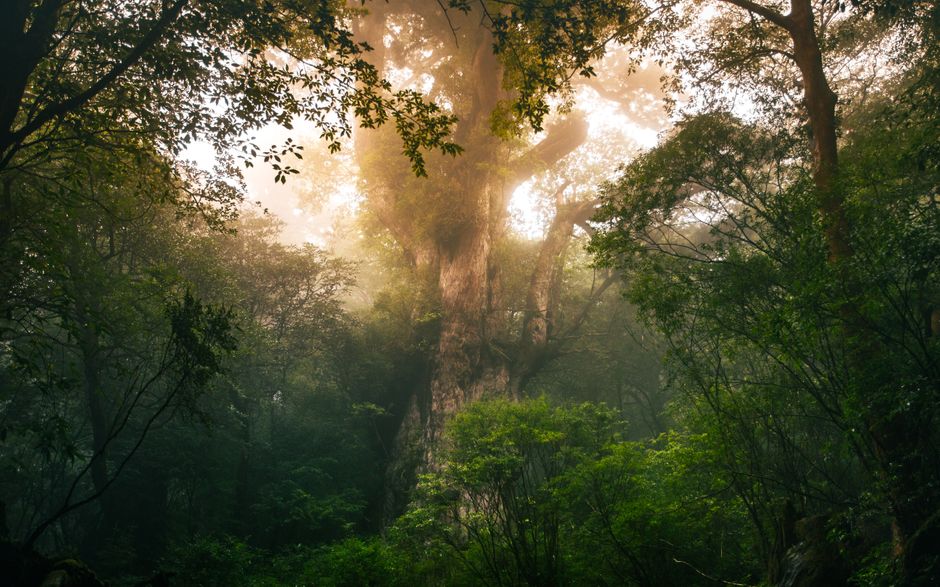
The last stretch before Nachi is the route's most famous passage: Daimon-zaka, a cedar-lined slope of roughly six hundred rough stone steps that climbs through a forest so old and so quiet that the rain felt like the loudest sound I had heard in years. The cedars on either side are mossy to head height. Mist drifted between the trunks, and at one point a wild boar crossed the path thirty meters ahead, indifferent to my presence.
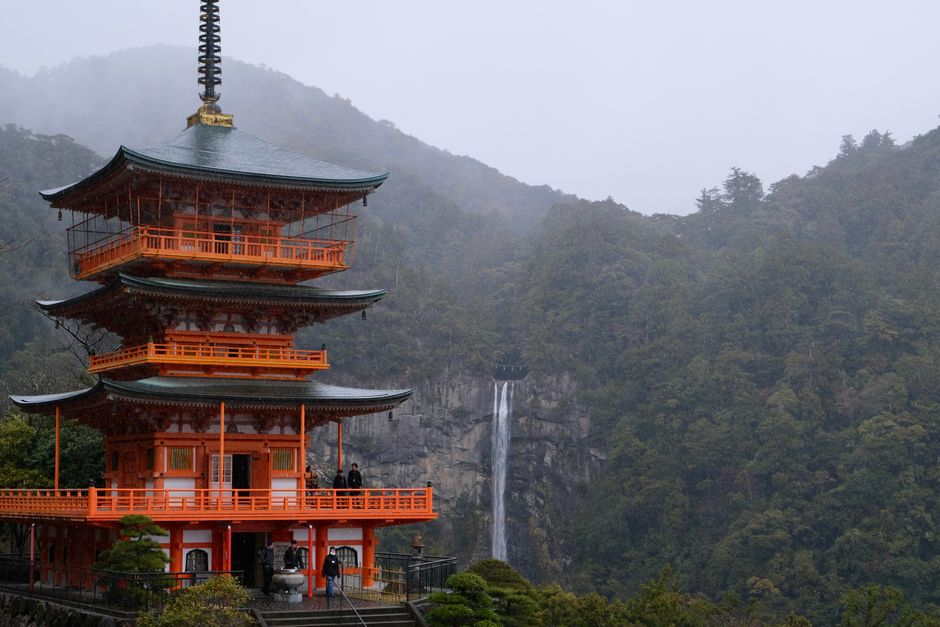
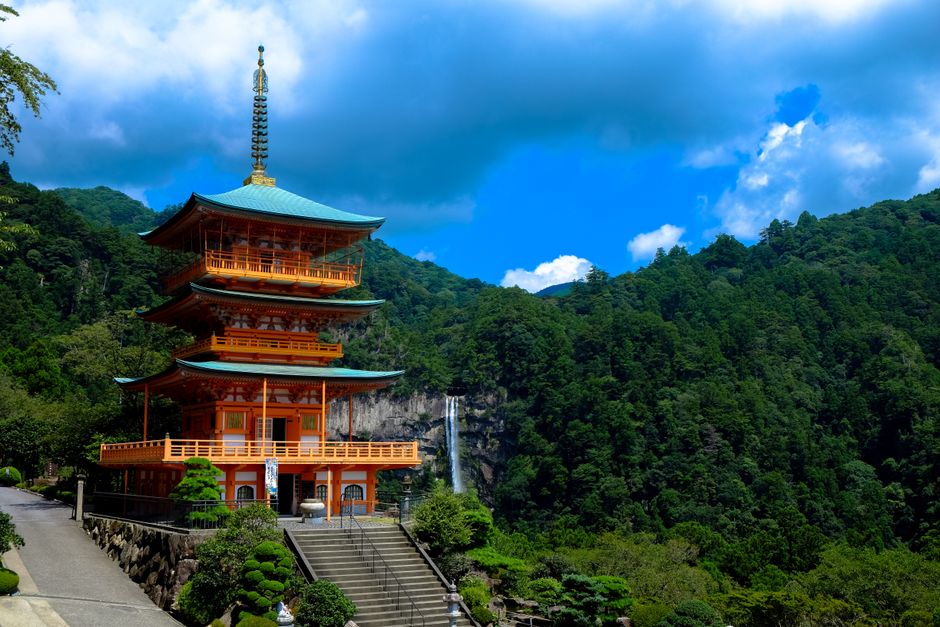
At the top, the reward is a view you earn: Nachi Taisha's vermilion pagoda, Seiganto-ji, and beyond them the thin white ribbon of Nachi Falls, 133 meters of water dropping straight off the mountainside — the tallest single-drop waterfall in Japan. In Shinto belief, the waterfall itself is the deity. From the viewing platform, pilgrims pour water from the falls into wooden cups and drink it; there is a small stand where you can do the same.
A Ryokan Dinner After the Mud
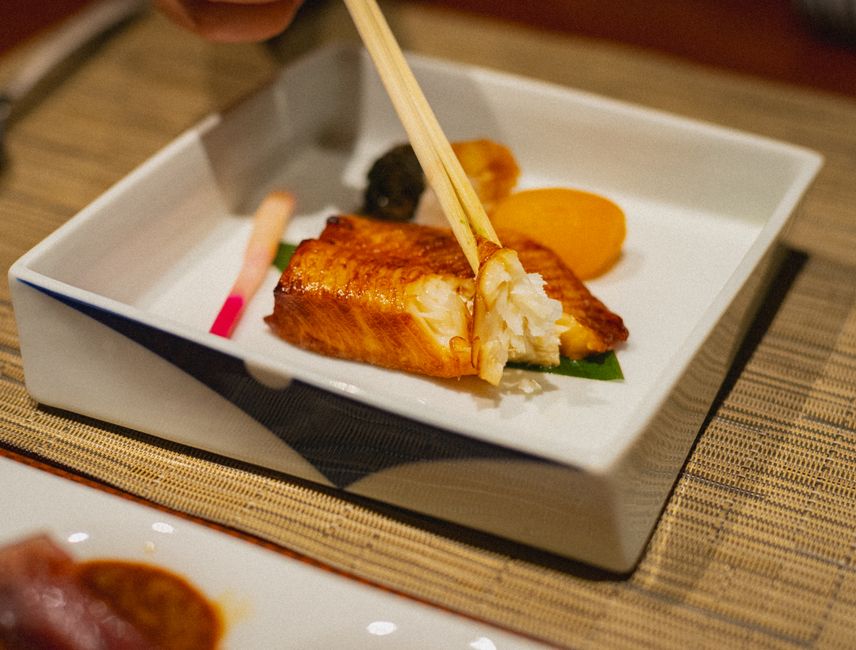
I had booked a night in Nachi-Katsuura, the fishing town at the base of the mountain, and my ryokan had the dinner waiting: slices of tuna from Katsuura's morning market — one of Japan's biggest tuna ports — along with local mountain vegetables, a tiny pot of miso soup, and grilled fish whose name I never caught. I ate slowly, bowed to the owner, and soaked in the onsen until my knees stopped complaining.
The trail soaked through my boots, my map, and my pride as a planner. I would still walk it again tomorrow — just with one pair of shoes and a much lighter pack.